Gold Coast eVTOL & Sky Taxis

The Future of Gold Coast Air Taxis

Information on air taxis, vertiport networks, and air mobility across Gold Coast and Queensland.

Learn more Future services
Electric eVTOL aircraft icon
Zero-emission flight

Emerging eVTOL aircraft use electric propulsion for quiet, low-carbon urban air mobility across the Gold Coast corridor.

Vertiport infrastructure icon
Vertiport networks

Proposed landing hubs at airports, rooftops, and transport interchanges could reshape Queensland air mobility by 2032.

Olympic transport icon
2032 Olympic transport

Industry forecasts link advanced air mobility investment to Brisbane 2032 venue connectivity and Gold Coast tourism demand.

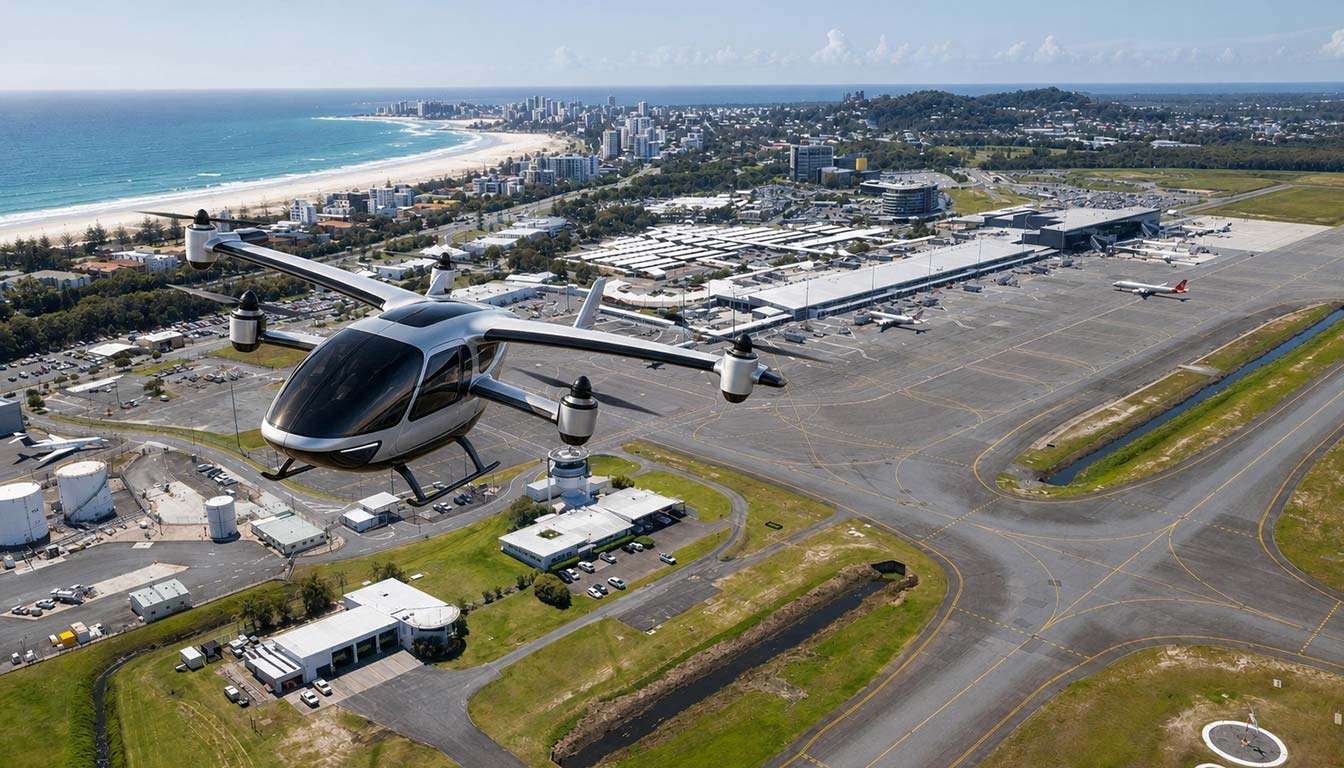
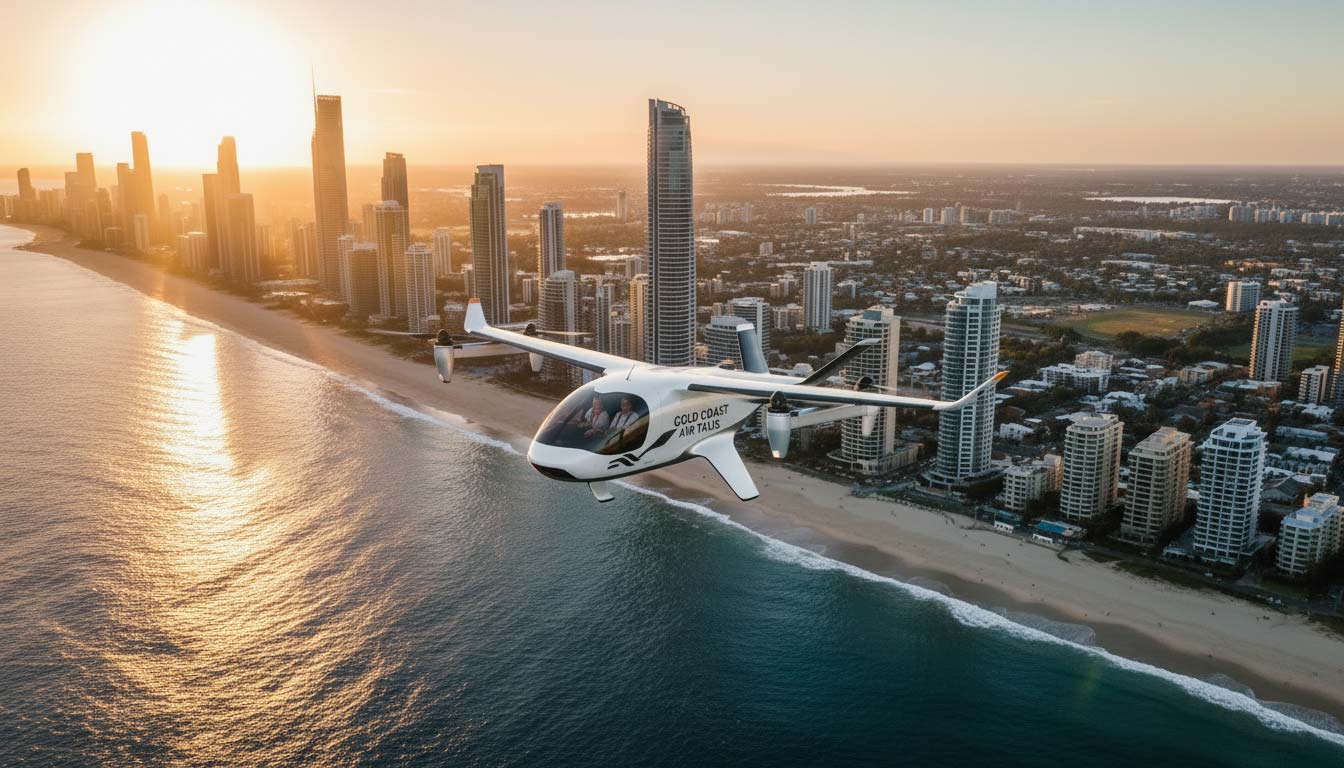
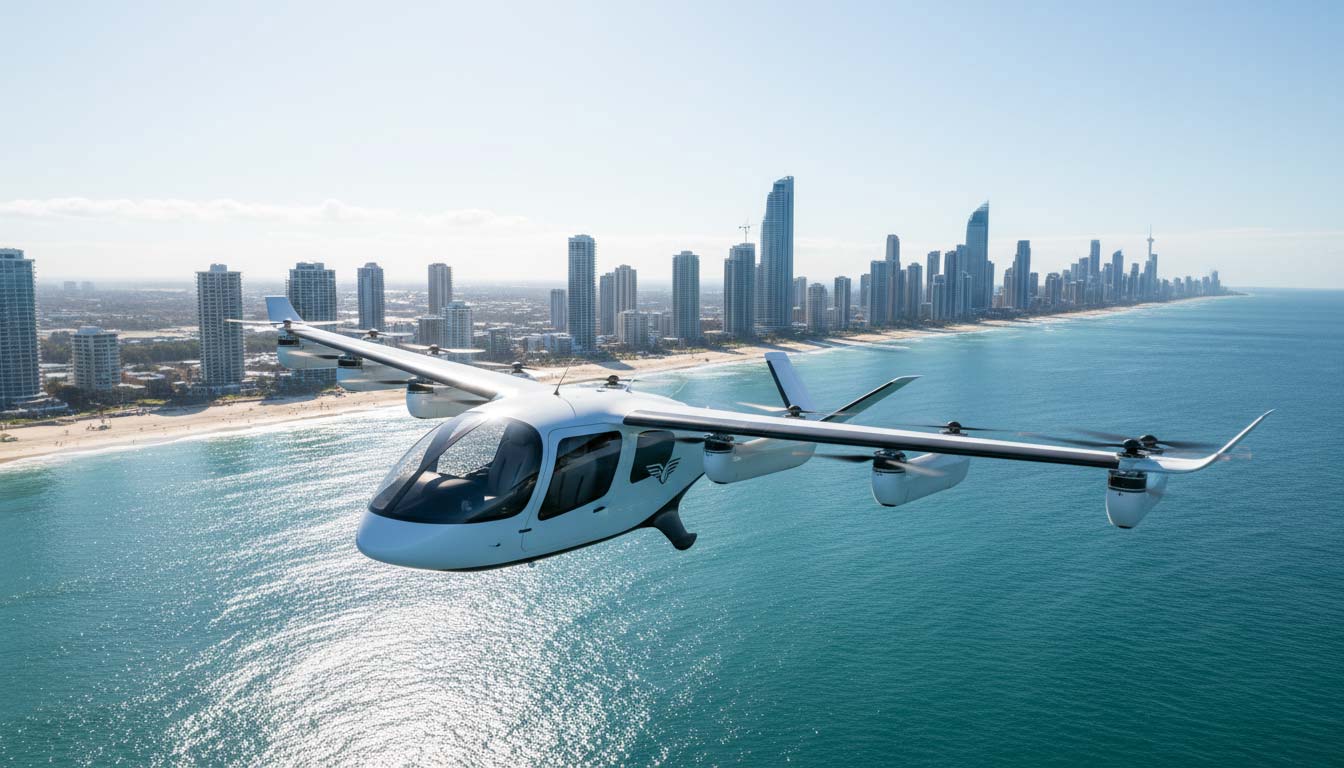
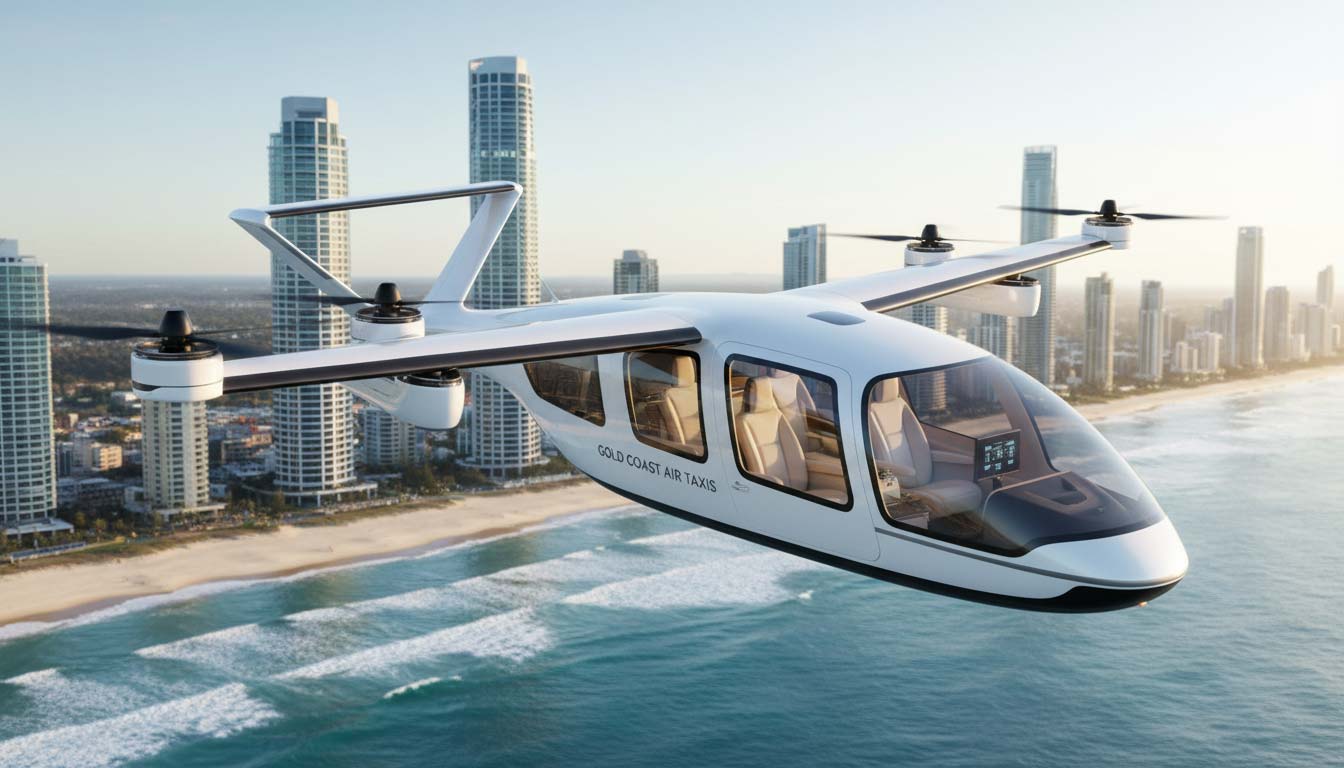
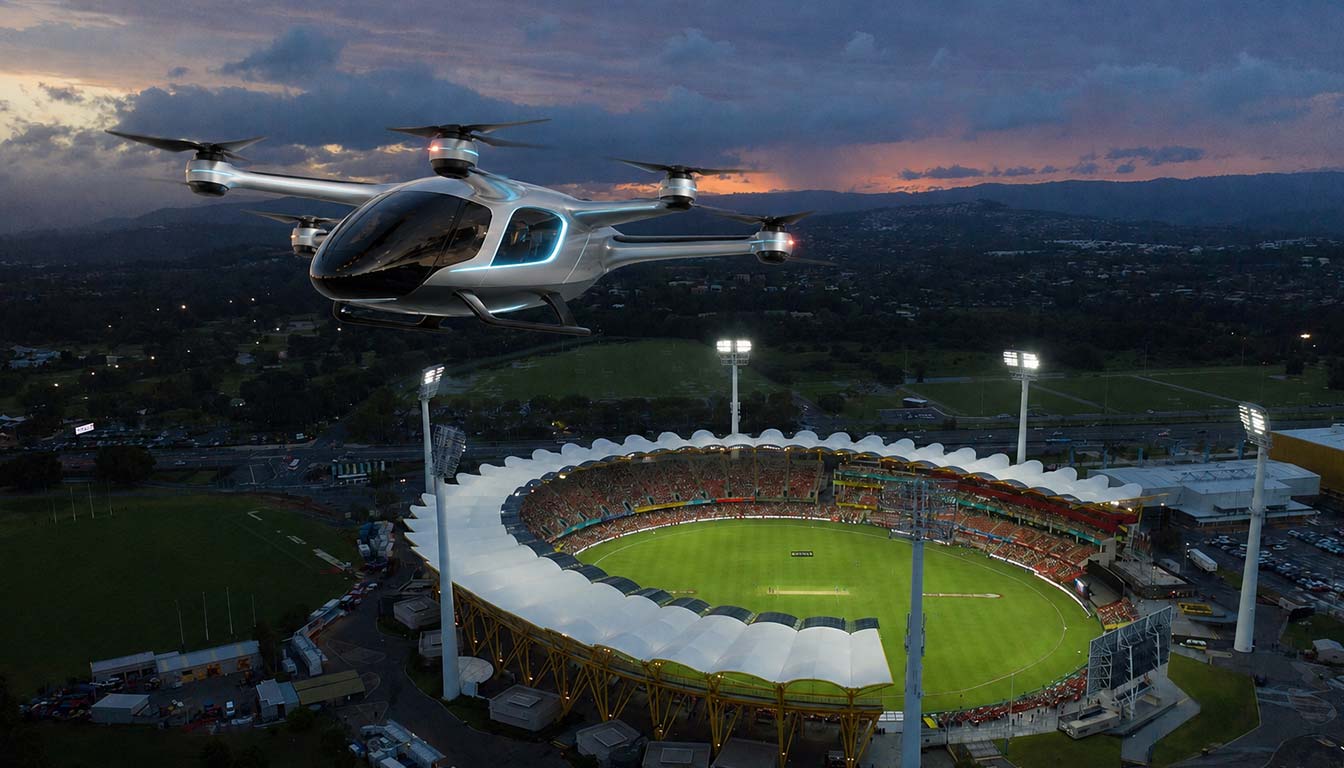
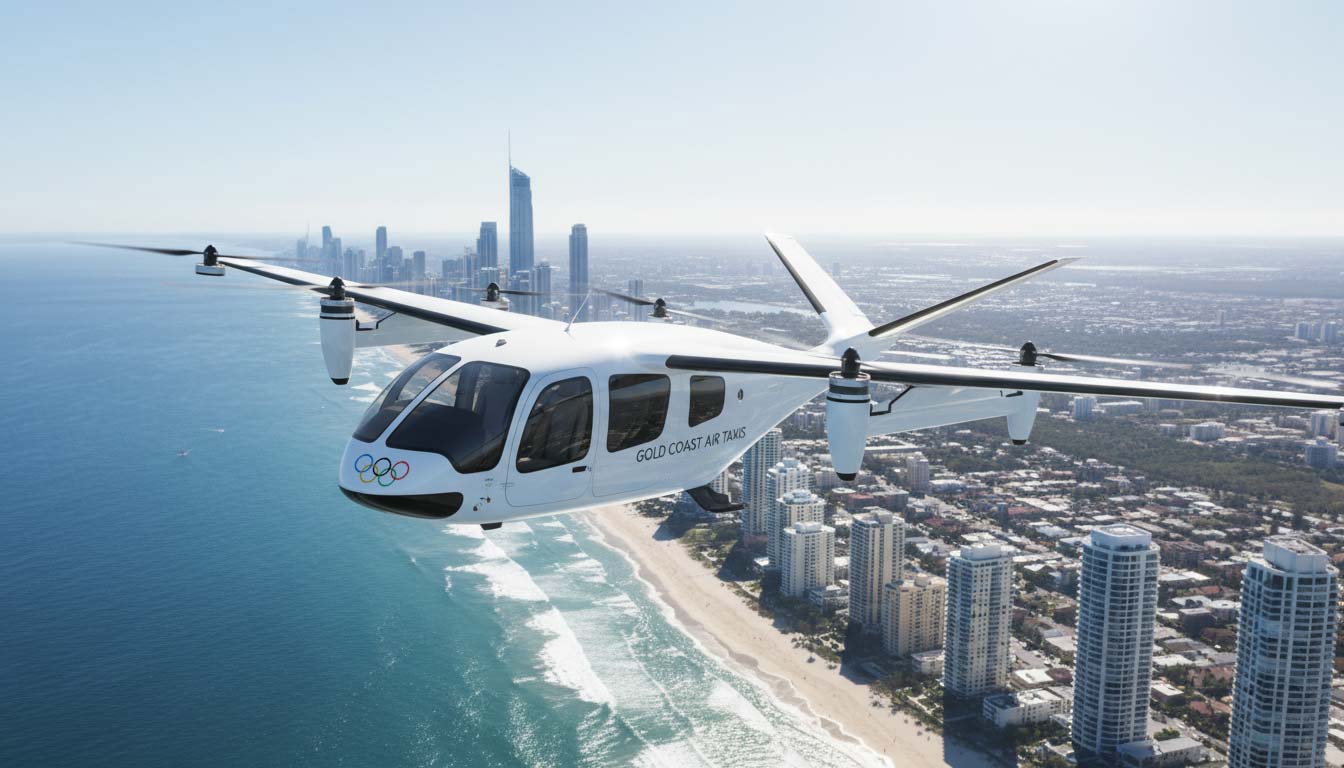
Concept eVTOL aircraft over Gold Coast skyline
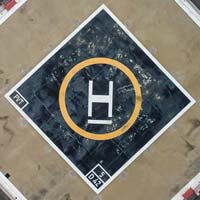
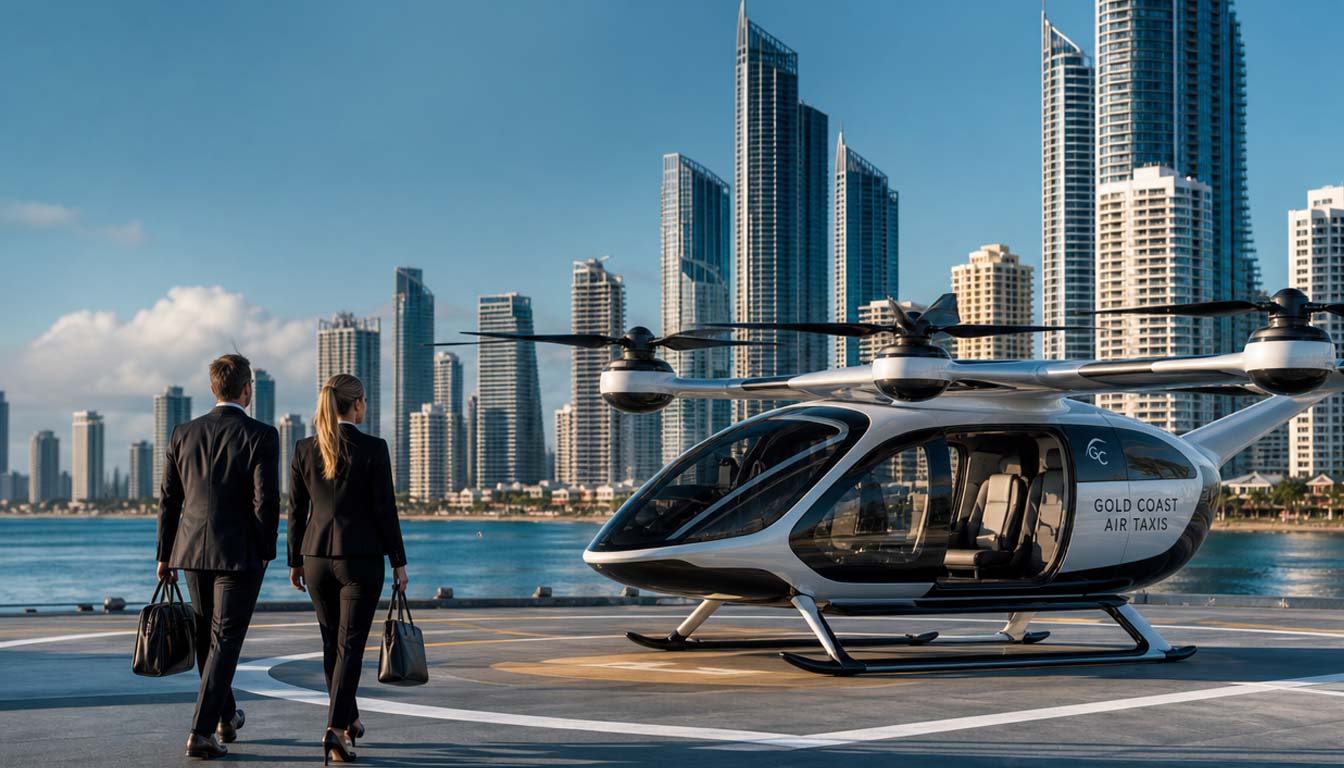
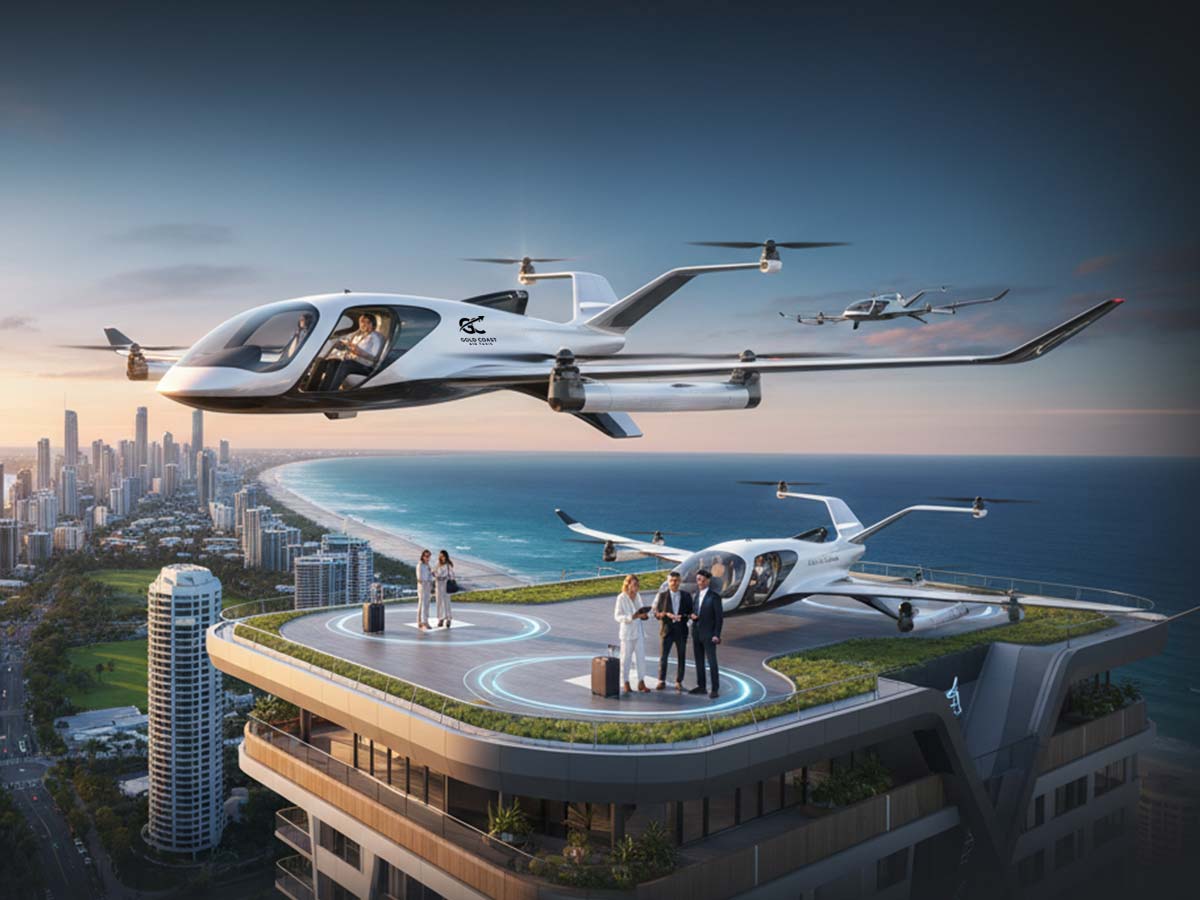
Proposed Gold Coast vertiport landing pad
What are eVTOLs?

Electric vertical take-off aircraft explained

Electric vertical take-off and landing (eVTOL) aircraft — air taxis or sky taxis — are designed for short urban and regional trips using multiple quiet electric rotors. Manufacturers are testing prototypes globally; in Australia, CASA is working on certification while Queensland explores vertiports. The Gold Coast is often cited as a candidate for early air taxi Australia services once approved.

  • Global: Flight testing underway; commercial passenger services not yet widely certified.
  • Australia: CASA developing eVTOL certification and operational rules.
  • Queensland: Advanced air mobility under discussion — no Gold Coast passenger air taxis today.

Future sky taxi services

Explore proposed service categories that eVTOL operators may offer across the Gold Coast and South East Queensland.

Airport Transfers — future Gold Coast air taxi service Airport
Airport Transfers

Proposed electric air taxi connections between Gold Coast Airport and key coastal destinations, reducing ground congestion ahead of major events.

Tourism Flights — future Gold Coast air taxi service Tourism
Tourism Flights

Scenic low-altitude flights over the Gold Coast skyline, hinterland, and coastline for visitors seeking premium aerial experiences.

Coastal Scenic Flights — future Gold Coast air taxi service Scenic
Coastal Scenic Flights

Low-noise coastal sightseeing routes from Coolangatta to Moreton Bay showcasing Queensland's iconic shoreline.

Business Commuter Flights — future Gold Coast air taxi service Commuter
Business Commuter Flights

Point-to-point executive travel between Gold Coast business districts and Brisbane CBD for time-sensitive professionals.

Luxury Air Transfers — future Gold Coast air taxi service Luxury
Luxury Air Transfers

Premium on-demand sky taxi services for resorts, private estates, and yacht transfers along the Gold Coast.

Event Transport — future Gold Coast air taxi service Events
Event Transport

High-capacity event shuttles for concerts, sporting fixtures, and festivals along the Gold Coast corridor.

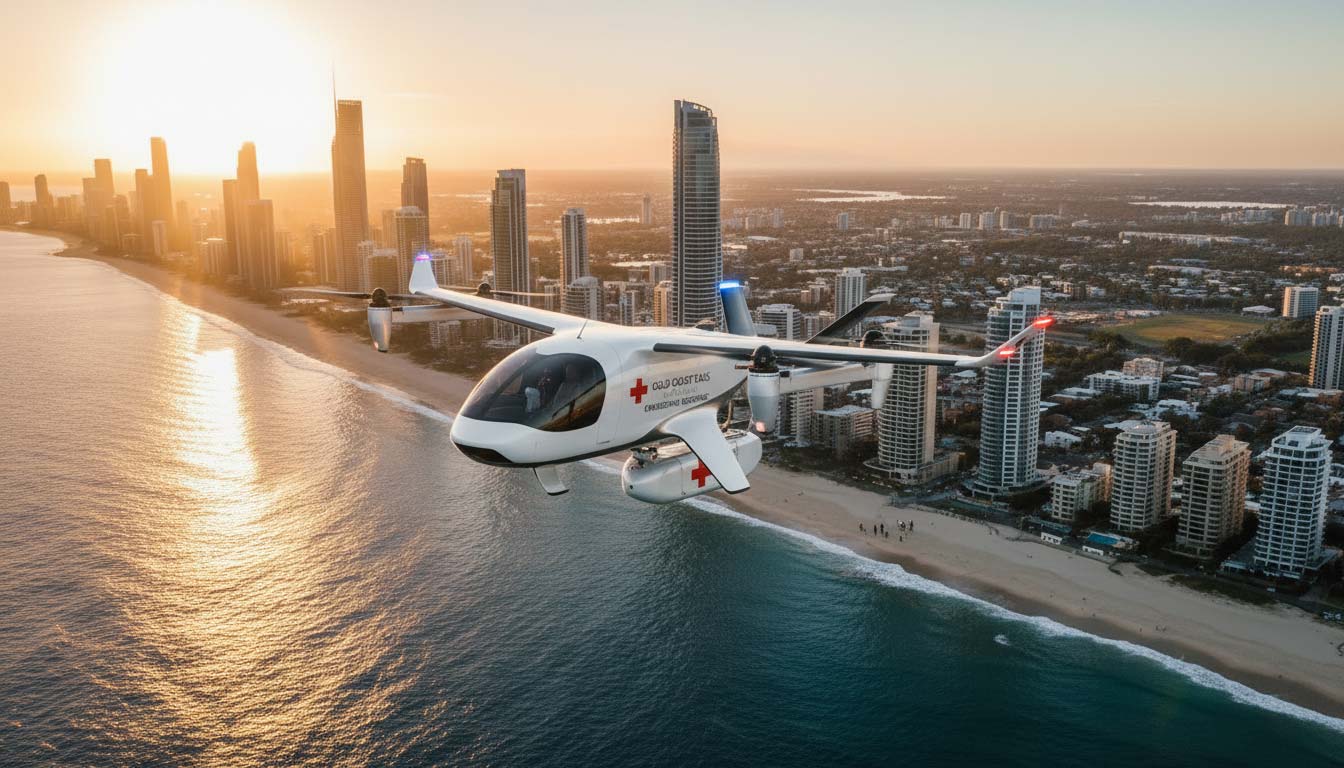
Emergency Response Support — future Gold Coast air taxi service Emergency
Emergency Response Support

Rapid aerial medical and emergency logistics support leveraging eVTOL speed and vertical landing capability.

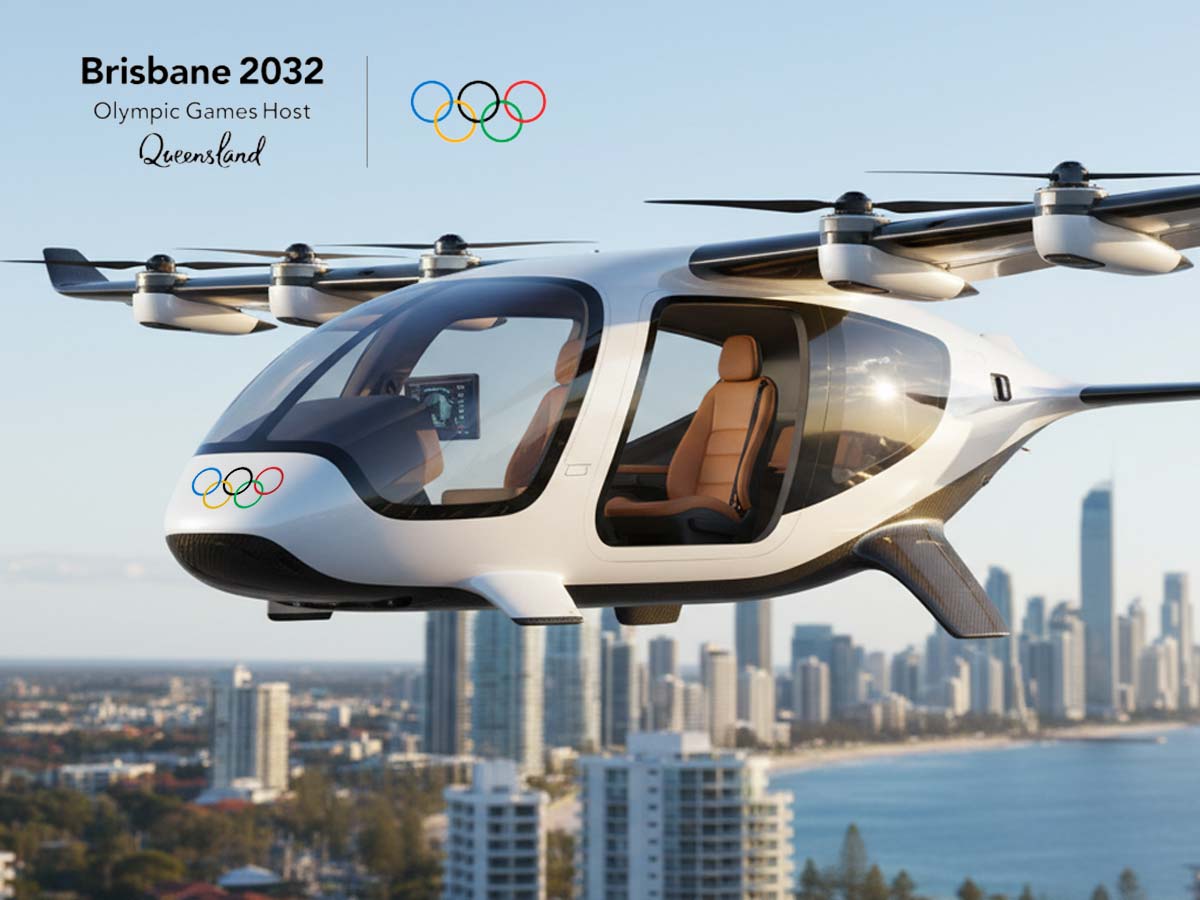
Olympic Transport Concepts — future Gold Coast air taxi service 2032 Olympics
Olympic Transport Concepts

Conceptual air mobility plans supporting athlete, official, and spectator movement during the Brisbane 2032 Olympic Games.

14.4M

Gold Coast visitors (2025)

Total visitors in the calendar year ending December 2025.

Source: Tourism Research Australia, via Experience Gold Coast (Feb 2026).

$8.9B

Visitor economy (2025)

Total visitor expenditure on the Gold Coast in 2025.

Source: Tourism Research Australia, via Experience Gold Coast (Feb 2026).

US$3.5B

AAM market forecast (2035)

Projected advanced air mobility market revenue in Australia. Industry estimate only.

Source: Grand View Research industry outlook (USD, 2035 forecast).

4.5M

SEQ population by 2032

Projected South East Queensland population when Brisbane hosts the Olympic Games.

Source: KPMG analysis, ABS data (ABC News, Dec 2025).

Why the corridor matters

The Pacific Motorway (M1) is the main road link between the Gold Coast and Brisbane. Congestion on this route is a documented transport challenge — separate from any future air taxi proposal.

60–90 min

Typical M1 drive time

Often quoted for Gold Coast–Brisbane trips in normal traffic conditions.

2+ hrs

Peak-period delays

Morning and afternoon peaks, incidents, and holiday traffic can extend motorway journeys substantially.

Road time references reflect commonly reported M1 travel experiences (e.g. ABC News, 2023).

2032 Brisbane Olympics

Olympic transport and the Gold Coast opportunity

The Brisbane 2032 Olympic and Paralympic Games represent a once-in-a-generation catalyst for transport infrastructure across South East Queensland. Gold Coast venues — including Broadbeach Park and Coomera indoor sports centres — will host international athletes and spectators, creating acute demand for fast, reliable cross-regional movement.

Transport planners are exploring multi-modal solutions: rail upgrades, bus rapid transit, and emerging Olympic transport Gold Coast concepts that include advanced air mobility. While no official Olympic air taxi contract exists, industry analysts expect the 2032 timeline to align with eVTOL certification milestones in Australia.

Proposed use cases include moving officials between Brisbane and Gold Coast venues, VIP spectator transfers, and logistics support during peak congestion windows. These remain conceptual and subject to government procurement, community consultation, and aviation safety approval.

Explore Olympic transport concepts
Concept map of Olympic transport routes between Brisbane and Gold Coast
Vertiport infrastructure

Future vertiport networks on the Gold Coast

Vertiports are the ground infrastructure that enables sky taxi operations. Unlike traditional airports, vertiports can be compact — occupying rooftops, car park levels, or dedicated pads near existing transport hubs. Industry proposals for Queensland include locations at Gold Coast Airport, Southport, Surfers Paradise, and Robina.

Design standards are evolving internationally through organisations such as Groupe ADP and NASA vertiport research programmes. Australian planners must address noise abatement, battery charging infrastructure, fire safety, and integration with local planning schemes. Community engagement will be essential as vertiport sites are identified.

For residents and businesses, vertiports could unlock new property values and tourism experiences — but also raise valid questions about airspace management, privacy, and equitable access. Gold Coast Air Taxis tracks these developments as independent commentary, not as a developer or operator.

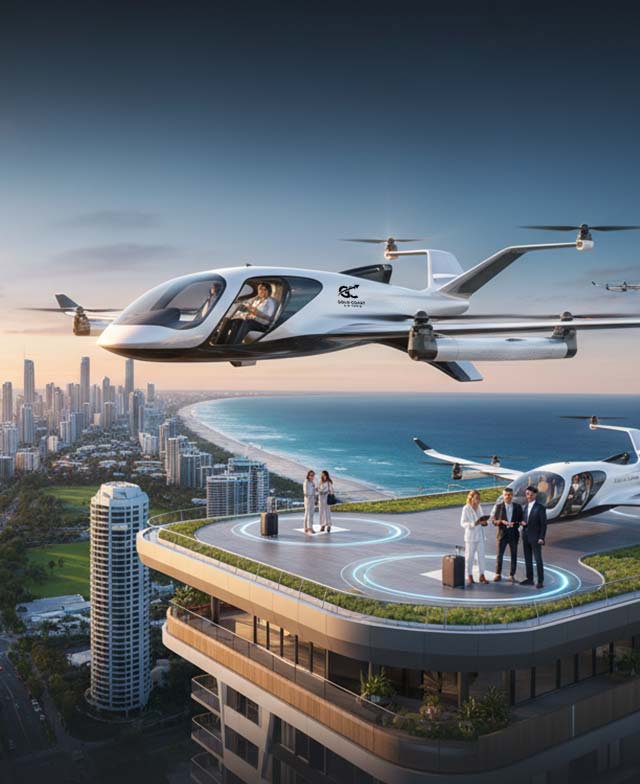
Artist impression of a future Gold Coast vertiport hub

Passenger time savings

Proposed sky taxi routes could shorten the Gold Coast–Brisbane trip compared with peak-hour M1 driving, which commonly takes 60–90 minutes and can exceed two hours in congestion (not an operational service today). Airport and business travellers are among those who may benefit if certified routes launch.

Tourism opportunities

Scenic coastal flights and resort transfers represent a potential premium tourism segment. The Gold Coast welcomed 14.4 million visitors in 2025 (Tourism Research Australia), supporting long-term interest in new transport options once regulatory frameworks allow.

Safety & sustainability

eVTOL designs emphasise redundant propulsion, autonomous flight systems, and zero tailpipe emissions. All commercial passenger operations in Australia will require rigorous CASA certification before launch.

Industry timeline

Expected milestones for Queensland air mobility

Projected industry timeline — subject to change based on certification, investment, and infrastructure delivery.

01
2024–2025 CASA regulatory framework

Australia advances eVTOL certification pathways and airspace integration studies.

02
2026–2028 Vertiport feasibility studies

Queensland government and private sector assess Gold Coast vertiport locations and community impact.

03
2028–2030 Trial operations

Expected demonstration flights and limited commercial trials at select Australian airports.

04
2030–2032 Olympic infrastructure push

Brisbane 2032 preparations may accelerate cross-regional mobility investments including air taxi concepts.

05
2032+ Scaled commercial networks

Industry forecasts suggest broader sky taxi networks across South East Queensland if certification and demand align.

Queensland industries set to benefit from air mobility

Expected applications across sectors as eVTOL networks mature in Australia.

Aviation
Property
Tourism
Business
Healthcare
Logistics
Events
Sustainability
Education
Technology
Transport
Community

Why the Gold Coast leads Australian advanced air mobility

Geography and demand

The Gold Coast occupies a unique position in Australia's transport landscape. Stretching along 57 kilometres of coastline, the city is linear — making ground transport inefficient for north-south movement. The M1 motorway regularly experiences congestion, particularly during school holidays and major events. Sky taxis offer a theoretical bypass of this bottleneck, connecting Coolangatta, Surfers Paradise, and Southport in minutes rather than hours.

Population growth continues across South East Queensland, projected to reach about 4.5 million residents by 2032 (KPMG analysis cited by ABC News). This demographic pressure adds context for new mobility options — including Queensland air mobility — that would complement existing rail and road networks if they proceed.

Policy and investment climate

Both the Queensland and Australian governments have signalled interest in advanced air mobility. Federal initiatives around emerging aviation technology, combined with state tourism and infrastructure budgets, create a favourable environment for private investment. However, public funding for vertiports remains uncertain — most proposed networks assume public-private partnerships.

Gold Coast Air Taxis monitors policy announcements, CASA consultations, and industry partnerships to provide timely, independent analysis. We do not endorse specific operators or manufacturers. Our mission is to help residents, investors, and visitors understand what future air mobility on the Gold Coast may look like — and what questions remain unanswered.

Gold Coast Air Taxis is an independent informational website covering emerging air mobility and eVTOL developments in Australia. This website is not affiliated with Skyports or any government organisation.

Sky taxis Australia: the national context

While this site focuses on the Gold Coast, advanced air mobility is a national conversation. Sydney, Melbourne, and Perth have each hosted industry summits exploring eVTOL feasibility. The Australian Government's Aviation White Paper acknowledges emerging aviation technologies as a potential contributor to regional connectivity — particularly for communities underserved by scheduled airline routes.

For South East Queensland, the combination of cross-border movement (Gold Coast to Brisbane to Sunshine Coast), tourism intensity, and Olympic infrastructure creates a uniquely compelling test bed. Industry commentators frequently cite the Los Angeles–Orange County corridor and the São Paulo helicopter commute market as analogues — though Australia's regulatory environment and lower existing helicopter penetration make direct comparisons imperfect.

How eVTOL differs from helicopters

Many readers first encounter air taxis through existing helicopter services. eVTOL aircraft differ in several important ways: electric propulsion reduces noise and operating costs; distributed rotors improve safety redundancy; and compact vertiport requirements enable urban integration at smaller sites. However, current battery technology limits range compared to turbine helicopters — making eVTOL best suited to short urban and regional hops rather than long-distance cross-country flight.

On the Gold Coast, this range profile aligns well with proposed routes: airport transfers, coastal tourism loops, and Brisbane commuter services all fall within the 30–100 kilometre envelope that next-generation eVTOL designs target.

Community considerations and airspace

Successful deployment of Gold Coast air taxis will require more than aircraft certification. Residents in flight path corridors will reasonably ask about noise, privacy, and visual impact. Industry advocates point to acoustic modelling showing eVTOL noise profiles several decibels below helicopters at equivalent altitudes — but community acceptance cannot be assumed and will require transparent consultation.

Airspace management is equally complex. Gold Coast Airport operates as a busy international gateway with controlled airspace extending across much of the coastal strip. Integrating low-altitude urban air mobility routes requires coordination between CASA, Airservices Australia, Defence, and local operators. Digital flight management platforms — sometimes called urban air traffic management (UATM) — are under development globally to address this challenge.

Investment and economic opportunity

Queensland's economy depends heavily on tourism, property, and construction — all sectors that could be affected by advanced air mobility if it proceeds. Vertiport and supporting infrastructure would require substantial public and private investment, though no Gold Coast vertiport funding has been confirmed at the time of writing. Employment opportunities could span aircraft maintenance, vertiport operations, software development, and regulatory compliance.

For investors and entrepreneurs, Gold Coast Air Taxis provides early visibility into market developments without commercial bias. We track public announcements, CASA publications, and credible industry reporting — helping stakeholders make informed decisions about a sector that remains high-risk but potentially transformative.

What to expect next

In the coming 24 months, watch for: CASA publication of final eVTOL certification guidelines; Queensland government vertiport feasibility study announcements; manufacturer selection of initial launch markets outside the United States; and increasing media coverage as the 2032 Olympic timeline shortens. Gold Coast Air Taxis will continue publishing independent analysis as these milestones approach.

Whether you are a Gold Coast resident curious about aircraft noise, a tourism operator exploring future partnerships, or a transport planner modelling Olympic scenarios, we invite you to bookmark this site and contact our editorial team with tips, corrections, or media enquiries. Stay informed as Queensland air mobility evolves.
FAQ

Gold Coast air taxi FAQ

Common questions about eVTOL, sky taxis, and future transport on the Gold Coast.

Gold Coast air taxis refer to proposed electric vertical take-off and landing (eVTOL) aircraft services that could transport passengers across South East Queensland. These sky taxis are not yet operational in Australia but are being developed globally with Queensland identified as a priority market.

Industry forecasts suggest initial commercial operations in Australia may begin in the late 2020s to early 2030s, potentially aligning with infrastructure investments ahead of the Brisbane 2032 Olympic Games. Exact timelines depend on CASA certification, vertiport construction, and operator approvals.

A vertiport is a dedicated landing and take-off facility for eVTOL aircraft, similar to a heliport but designed for electric air taxis. Proposed Gold Coast vertiports may be located at airports, rooftops, transport hubs, and tourism precincts.

The Brisbane 2032 Olympic Games are expected to drive significant transport infrastructure investment across South East Queensland. Advanced air mobility is among the emerging solutions being discussed to move athletes, officials, and visitors efficiently between Gold Coast venues and Brisbane.

No. Gold Coast Air Taxis is an independent informational website. We do not operate aircraft, sell tickets, or represent any eVTOL manufacturer or vertiport developer. We publish analysis and guides about future air mobility in Australia.

eVTOL manufacturers are designing aircraft with multiple redundant rotors, ballistic parachutes, and autonomous flight systems. In Australia, all commercial operations will require Civil Aviation Safety Authority (CASA) certification before carrying passengers.

Scroll